create dynamic variable in procedure

Collapse
This topic is closed.
X
X
 
  • Time
  • Show
Clear All
new posts
  • bprocopio@lifespan.org

    create dynamic variable in procedure

    Please help. I'm stumped.

    I need to create a dynamic variable in a procedure that will be used
    to update a variable of the same name in a table. i.e. the name in
    tblAnalysisScor es are WEAQScore0, WEAQScore1,WEAQ Score5, MissingWEAQ0,
    MissingWEAQ1, MissingWEAQ5
    The 0, 1, 5 are the @Interval. I am using a cursor to loop through the
    table. Each row in the table is the data for one person at a given
    timepoint (0,1,5).

    This is what I have so far, but it doesn't recognize the concatenated
    name as the name in the table.
    What is the correct syntax to reference the variable?

    In the code before this, I have already calculated @WEAQScore for the
    current record of data. Now I want to update the correct variable in
    tblAnalysisScor es

    UPDATE tblAnalysisScor es SET
    -- WEAQ Summmary/Missing
    'WEAQScore'+ cast(@Interval as char(1)) = @WEAQScore
    ,'MissingWEAQ' + cast(@Interval as char(1)) = @MissingWEAQ
    WHERE
    SubID = @SubID

  • Plamen Ratchev

    #2
    Re: create dynamic variable in procedure

    You can avoid dynamic SQL with something like this:

    UPDATE tblAnalysisScor es
    SET WEAQScore0 = CASE WHEN @Interval = 0 THEN @WEAQScore ELSE WEAQScore0
    END,
    MissingWEAQ0 = CASE WHEN @Interval = 0 THEN @MissingWEAQ ELSE
    MissingWEAQ0 END,
    WEAQScore1 = CASE WHEN @Interval = 1 THEN @WEAQScore ELSE WEAQScore1
    END,
    MissingWEAQ1 = CASE WHEN @Interval = 1 THEN @MissingWEAQ ELSE
    MissingWEAQ1 END,
    WEAQScore5 = CASE WHEN @Interval = 5 THEN @WEAQScore ELSE WEAQScore5
    END,
    MissingWEAQ5 = CASE WHEN @Interval = 5 THEN @MissingWEAQ ELSE
    MissingWEAQ5 END
    WHERE SubID = @SubID;

    HTH,

    Plamen Ratchev


    Comment

    • bprocopio@lifespan.org

      #3
      Re: create dynamic variable in procedure

      On May 14, 5:01 pm, "Plamen Ratchev" <Pla...@SQLStud io.comwrote:
      You can avoid dynamic SQL with something like this:
      >
      UPDATE tblAnalysisScor es
      SET WEAQScore0 = CASE WHEN @Interval = 0 THEN @WEAQScore ELSE WEAQScore0
      END,
            MissingWEAQ0 = CASE WHEN @Interval = 0 THEN @MissingWEAQ ELSE
      MissingWEAQ0 END,
            WEAQScore1 = CASE WHEN @Interval = 1 THEN @WEAQScore ELSE WEAQScore1
      END,
            MissingWEAQ1 = CASE WHEN @Interval = 1 THEN @MissingWEAQ ELSE
      MissingWEAQ1 END,
            WEAQScore5 = CASE WHEN @Interval = 5 THEN @WEAQScore ELSE WEAQScore5
      END,
            MissingWEAQ5 = CASE WHEN @Interval = 5 THEN @MissingWEAQ ELSE
      MissingWEAQ5 END
      WHERE SubID = @SubID;
      >
      HTH,
      >
      Plamen Ratchevhttp://www.SQLStudio.c om
      Thanks for your quick response. I appreciate that. I thought of
      setting the values with CASE, but I have 12 measures. The problem is
      the 12 measures have up to 12 timepoints with 5 sessions within each
      timepoint and some have 3 sessions within the 5 sessions. That would
      be a lot of code. That is why I was hoping to do it with dynamic
      variables (Hope that is the right term. I am relatively new to SQL)
      Seemed like a great idea since I have the timepoint and session and
      just need to concatenate those to create the variable name that is
      already in the table.
      I don't know what the syntax is to create a dynamic variable. Do I
      have to have a recordset open for tblAnalysisScor es? I'm just
      grasping here.

      Comment

      • Plamen Ratchev

        #4
        Re: create dynamic variable in procedure

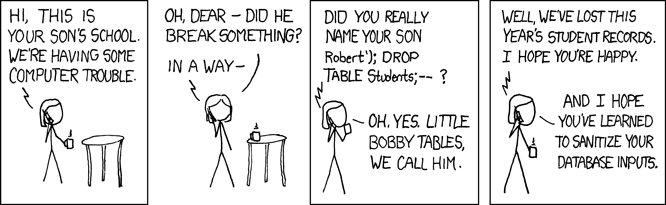
        You cannot use variables for column names in dynamic SQL. You would have to
        concatenate the SQL as a string to add the columns, and then pass the other
        parameters and execute.

        DECLARE @sql NVARCHAR(2000);

        SET @sql = N'
        UPDATE tblAnalysisScor es
        SET WEAQScore' + CAST(@Interval AS CHAR(1)) + ' = @WEAQScore, ' +
        ' MissingWEAQ' + CAST(@Interval AS CHAR(1)) + ' = @MissingWEAQ
        WHERE SubID = @SubID';

        DECLARE @params NVARCHAR(100);

        SET @params = N'@WEAQScore INT, @MissingWEAQ INT, @SubID INT';

        EXEC sp_executesql @sql, @params, @WEAQScore, @MissingWEAQ, @SubID

        Read Erland Sommarskog's article on dynamic SQL:


        HTH,

        Plamen Ratchev


        Comment

        • --CELKO--

          #5
          Re: create dynamic variable in procedure

          > The problem is the 12 measures have up to 12 timepoints with 5 sessions within each timepoint and some have 3 sessions within the 5 sessions. That would be a lot of code. <<

          LOL! Why is it that traditional proceudral programmers think nothing
          of writing hundreds of lines of procedural code then panic over using
          a text editor to generate a long SQL query with a repetitive
          structure?

          What Ratchev gave you will touch the table once, avoid using a cursor
          (figure ~10 to ~100 times faster) and be easy to maintain because of
          the repetitive structure of the CASE expressions.

          Comment

          • Shuurai

            #6
            Re: create dynamic variable in procedure

            Thanks for your quick response. I appreciate that. I thought of
            setting the values with CASE, but I have 12 measures.  The problem is
            the 12 measures have up to 12 timepoints with 5 sessions within each
            timepoint and some have 3 sessions within the 5 sessions.  That would
            be a lot of code.  
            It would be a lot more code, but that code will run orders of
            magnitude faster than what you are doing now because it would only
            have to to read from the table once, would not have the overhead
            associated with cursor. The code also would be far easier to read an
            maintain for anyone (including you) who had to deal with problems in
            the future.

            Comment

            • bprocopio@lifespan.org

              #7
              Re: create dynamic variable in procedure

              On May 15, 1:05 pm, Shuurai <Shuura...@hotm ail.comwrote:
              Thanks for your quick response. I appreciate that. I thought of
              setting the values with CASE, but I have 12 measures.  The problem is
              the 12 measures have up to 12 timepoints with 5 sessions within each
              timepoint and some have 3 sessions within the 5 sessions.  That would
              be a lot of code.  
              >
              It would be a lot more code, but that code will run orders of
              magnitude faster than what you are doing now because it would only
              have to to read from the table once, would not have the overhead
              associated with cursor.  The code also would be far easier to read an
              maintain for anyone (including you) who had to deal with problems in
              the future.
              You have all been very helpful. This is great. Thanks!

              Comment

              • Erland Sommarskog

                #8
                Re: create dynamic variable in procedure

                (bprocopio@life span.org) writes:
                Thanks for your quick response. I appreciate that. I thought of
                setting the values with CASE, but I have 12 measures. The problem is
                the 12 measures have up to 12 timepoints with 5 sessions within each
                timepoint and some have 3 sessions within the 5 sessions. That would
                be a lot of code. That is why I was hoping to do it with dynamic
                variables (Hope that is the right term. I am relatively new to SQL)
                Seemed like a great idea since I have the timepoint and session and
                just need to concatenate those to create the variable name that is
                already in the table.
                You are right, that would be a lot of code. That may reflect that this
                is not the best table design for the task. Maybe those columns should
                be rows instead. But without knowledge of the business domain, I don't
                want to make a definitive statement on that point.


                --
                Erland Sommarskog, SQL Server MVP, esquel@sommarsk og.se

                Books Online for SQL Server 2005 at

                Books Online for SQL Server 2000 at

                Comment

                Working...