Python license (2.3)

Collapse
This topic is closed.
X
X
 
  • Time
  • Show
Clear All
new posts
  • Antoon Pardon

    #1

    Python license (2.3)

    I have made a module derived from the Queue module deliverd
    with python 2.3. I would like to make this module (called
    tube) available for other people. However it is not clear
    to me how I can do this in accordance with the python
    license.

    First of all it seems I have to make a sumary of how
    my module differs from the original.

    Second it seems I have to include the following in
    my code:

    "Copyright (c) 2001, 2002 Python Software Foundation;
    All Rights Reserved"

    Do I understand correctly?

    Because I don't mind the first but I'm not so happy
    with the second. Are there other things I have to
    watch out for?

    --
    Antoon Pardon

  • Steve Holden

    #2
    Re: Python license (2.3)

    Antoon Pardon wrote:[color=blue]
    > I have made a module derived from the Queue module deliverd
    > with python 2.3. I would like to make this module (called
    > tube) available for other people. However it is not clear
    > to me how I can do this in accordance with the python
    > license.
    >
    > First of all it seems I have to make a sumary of how
    > my module differs from the original.
    >[/color]
    That would seem to apply primarily because this is a derivative product
    of a Python distribution. Therefore, your description could be limited
    to "removed the rest of the distribution" followed by specific details
    of your changes making Queue into tube.
    [color=blue]
    > Second it seems I have to include the following in
    > my code:
    >
    > "Copyright (c) 2001, 2002 Python Software Foundation;
    > All Rights Reserved"
    >
    > Do I understand correctly?
    >[/color]
    I believe so.
    [color=blue]
    > Because I don't mind the first but I'm not so happy
    > with the second. Are there other things I have to
    > watch out for?
    >[/color]
    Since the PSF copyrighted the original work from which you are deriving,
    you have already agreed to do this in any distributed derived work:

    The official home of the Python Programming Language


    clearly says """provided , however, that PSF's License Agreement and
    PSF's notice of copyright, i.e., "Copyright (c) 2001, 2002, 2003 Python
    Software Foundation; All Rights Reserved" are retained in Python 2.3
    alone or in any derivative version prepared by Licensee."""

    Should we wait until you publish tube and then remove *your* attribution
    to claim the code as our own?

    regards
    Steve
    --
    Steve Holden +1 703 861 4237 +1 800 494 3119
    Holden Web LLC http://www.holdenweb.com/
    Python Web Programming http://pydish.holdenweb.com/

    Comment

    • Antoon Pardon

      #3
      Re: Python license (2.3)

      Op 2005-04-12, Steve Holden schreef <steve@holdenwe b.com>:[color=blue]
      > Antoon Pardon wrote:[color=green]
      >> I have made a module derived from the Queue module deliverd
      >> with python 2.3. I would like to make this module (called
      >> tube) available for other people. However it is not clear
      >> to me how I can do this in accordance with the python
      >> license.
      >>
      >> First of all it seems I have to make a sumary of how
      >> my module differs from the original.
      >>[/color]
      > That would seem to apply primarily because this is a derivative product
      > of a Python distribution. Therefore, your description could be limited
      > to "removed the rest of the distribution" followed by specific details
      > of your changes making Queue into tube.
      >[color=green]
      >> Second it seems I have to include the following in
      >> my code:
      >>
      >> "Copyright (c) 2001, 2002 Python Software Foundation;
      >> All Rights Reserved"
      >>
      >> Do I understand correctly?
      >>[/color]
      > I believe so.
      >[color=green]
      >> Because I don't mind the first but I'm not so happy
      >> with the second. Are there other things I have to
      >> watch out for?
      >>[/color]
      > Since the PSF copyrighted the original work from which you are deriving,
      > you have already agreed to do this in any distributed derived work:
      >
      > http://www.python.org/2.3/license.html
      >
      > clearly says """provided , however, that PSF's License Agreement and
      > PSF's notice of copyright, i.e., "Copyright (c) 2001, 2002, 2003 Python
      > Software Foundation; All Rights Reserved" are retained in Python 2.3
      > alone or in any derivative version prepared by Licensee."""
      >
      > Should we wait until you publish tube and then remove *your* attribution
      > to claim the code as our own?[/color]

      Oh I see, I just have to include that attribution, next to my own.
      I somehow got the idea that I had to hand over my copyright to
      the Python Software Foundation.

      What licence can I use? Somewhere they say you can combine python
      code with GPL code. Does that mean that the resulting code has
      to have both the GPL license as the PSF license, as both seem
      to want that derived work uses the same license.

      --
      Antoon Pardon

      Comment

      • R. C. James Harlow

        #4
        Re: Python license (2.3)

        On Tuesday 12 April 2005 09:51, Antoon Pardon wrote:[color=blue]
        > It seems I have to include the following in
        > my code:
        >
        > "Copyright (c) 2001, 2002 Python Software Foundation;
        > All Rights Reserved"
        >
        > Do I understand correctly?[/color]

        You are of course allowed to *add* your own copyright statement:

        "Copyright (c) 2001, 2002 Python Software Foundation;
        All Rights Reserved
        Copyright (c) 2005 Antoon Pardon;
        All Rights Reserved"

        -----BEGIN PGP SIGNATURE-----
        Version: GnuPG v1.2.4 (GNU/Linux)

        iD8DBQBCW8w0Y6W 16wIJgxQRAoaZAK CliuTwT8WuD92+z X3U9AIvCpvaGgCf fM0B
        Kch1nH7PzJtD1Nb AvS/vvtg=
        =ciFp
        -----END PGP SIGNATURE-----

        Comment

        • Robert Kern

          #5
          Re: Python license (2.3)

          Antoon Pardon wrote:
          [color=blue]
          > What licence can I use? Somewhere they say you can combine python
          > code with GPL code. Does that mean that the resulting code has
          > to have both the GPL license as the PSF license, as both seem
          > to want that derived work uses the same license.[/color]

          No, the PSF does not want that. It does not say so anywhere in the
          license text. Yes, you can GPL the derived work. The licenses are
          compatible.

          --
          Robert Kern
          rkern@ucsd.edu

          "In the fields of hell where the grass grows high
          Are the graves of dreams allowed to die."
          -- Richard Harter

          Comment

          • Antoon Pardon

            #6
            Re: Python license (2.3)

            Op 2005-04-12, Robert Kern schreef <rkern@ucsd.edu >:[color=blue]
            > Antoon Pardon wrote:
            >[color=green]
            >> What licence can I use? Somewhere they say you can combine python
            >> code with GPL code. Does that mean that the resulting code has
            >> to have both the GPL license as the PSF license, as both seem
            >> to want that derived work uses the same license.[/color]
            >
            > No, the PSF does not want that. It does not say so anywhere in the
            > license text. Yes, you can GPL the derived work. The licenses are
            > compatible.
            >[/color]

            This comes from the license text.

            | 2. Subject to the terms and conditions of this License Agreement, PSF
            | hereby grants Licensee a nonexclusive, royalty-free, world-wide
            | license to reproduce, analyze, test, perform and/or display publicly,
            | prepare derivative works, distribute, and otherwise use Python 2.3
            | alone or in any derivative version, provided, however, that PSF's
            | License Agreement and PSF's notice of copyright, i.e., "Copyright (c)
            | 2001, 2002, 2003 Python Software Foundation; All Rights Reserved" are
            | retained in Python 2.3 alone or in any derivative version prepared by
            | Licensee.

            So what should I understand by: provided, however, that PSF's License
            Agreement ... are retained in Python 2.3 alone or in any derivative
            version prepared by Licensee.

            --
            Antoon Pardon

            Comment

            • Robert Kern

              #7
              Re: Python license (2.3)

              Antoon Pardon wrote:[color=blue]
              > Op 2005-04-12, Robert Kern schreef <rkern@ucsd.edu >:
              >[color=green]
              >>Antoon Pardon wrote:
              >>
              >>[color=darkred]
              >>>What licence can I use? Somewhere they say you can combine python
              >>>code with GPL code. Does that mean that the resulting code has
              >>>to have both the GPL license as the PSF license, as both seem
              >>>to want that derived work uses the same license.[/color]
              >>
              >>No, the PSF does not want that. It does not say so anywhere in the
              >>license text. Yes, you can GPL the derived work. The licenses are
              >>compatible.
              >>[/color]
              >
              >
              > This comes from the license text.
              >
              > | 2. Subject to the terms and conditions of this License Agreement, PSF
              > | hereby grants Licensee a nonexclusive, royalty-free, world-wide
              > | license to reproduce, analyze, test, perform and/or display publicly,
              > | prepare derivative works, distribute, and otherwise use Python 2.3
              > | alone or in any derivative version, provided, however, that PSF's
              > | License Agreement and PSF's notice of copyright, i.e., "Copyright (c)
              > | 2001, 2002, 2003 Python Software Foundation; All Rights Reserved" are
              > | retained in Python 2.3 alone or in any derivative version prepared by
              > | Licensee.
              >
              > So what should I understand by: provided, however, that PSF's License
              > Agreement ... are retained in Python 2.3 alone or in any derivative
              > version prepared by Licensee.[/color]

              Yes, the license text and the copyright notice must be attached. It
              doesn't mean that the PSF license is the operative one for the
              derivative work. You can put *your* own terms on top for *your* own code
              as long as you can satisfy the requirements of the PSF license, which
              are very light.

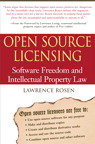
              Read Larry Rosen's book:


              --
              Robert Kern
              rkern@ucsd.edu

              "In the fields of hell where the grass grows high
              Are the graves of dreams allowed to die."
              -- Richard Harter

              Comment

              • Antoon Pardon

                #8
                Re: Python license (2.3)

                Op 2005-04-13, Robert Kern schreef <rkern@ucsd.edu >:[color=blue]
                > Antoon Pardon wrote:[color=green]
                >> Op 2005-04-12, Robert Kern schreef <rkern@ucsd.edu >:
                >>[color=darkred]
                >>>Antoon Pardon wrote:
                >>>
                >>>
                >>>>What licence can I use? Somewhere they say you can combine python
                >>>>code with GPL code. Does that mean that the resulting code has
                >>>>to have both the GPL license as the PSF license, as both seem
                >>>>to want that derived work uses the same license.
                >>>
                >>>No, the PSF does not want that. It does not say so anywhere in the
                >>>license text. Yes, you can GPL the derived work. The licenses are
                >>>compatible .
                >>>[/color]
                >>
                >>
                >> This comes from the license text.
                >>
                >> | 2. Subject to the terms and conditions of this License Agreement, PSF
                >> | hereby grants Licensee a nonexclusive, royalty-free, world-wide
                >> | license to reproduce, analyze, test, perform and/or display publicly,
                >> | prepare derivative works, distribute, and otherwise use Python 2.3
                >> | alone or in any derivative version, provided, however, that PSF's
                >> | License Agreement and PSF's notice of copyright, i.e., "Copyright (c)
                >> | 2001, 2002, 2003 Python Software Foundation; All Rights Reserved" are
                >> | retained in Python 2.3 alone or in any derivative version prepared by
                >> | Licensee.
                >>
                >> So what should I understand by: provided, however, that PSF's License
                >> Agreement ... are retained in Python 2.3 alone or in any derivative
                >> version prepared by Licensee.[/color]
                >
                > Yes, the license text and the copyright notice must be attached. It
                > doesn't mean that the PSF license is the operative one for the
                > derivative work.[/color]

                Why attach a license that is not operative. That doesn't make sense
                to me and will IMO just create confusion.
                [color=blue]
                > You can put *your* own terms on top for *your* own code
                > as long as you can satisfy the requirements of the PSF license, which
                > are very light.
                >
                > Read Larry Rosen's book:
                >
                > http://www.rosenlaw.com/oslbook.htm[/color]

                I skimmed it and it doesn't seem to contain anything that helps me
                with the PSF. If it does could you at least point me to the right
                chapter.

                --
                Antoon Pardon

                Comment

                • Robert Kern

                  #9
                  Re: Python license (2.3)

                  Antoon Pardon wrote:[color=blue]
                  > Op 2005-04-13, Robert Kern schreef <rkern@ucsd.edu >:[/color]
                  [color=blue][color=green]
                  >>Yes, the license text and the copyright notice must be attached. It
                  >>doesn't mean that the PSF license is the operative one for the
                  >>derivative work.[/color]
                  >
                  >
                  > Why attach a license that is not operative. That doesn't make sense
                  > to me and will IMO just create confusion.[/color]

                  Because it's not your code. The tiny obligation that you have to satisfy
                  is to say that some of the code comes from someone else and is available
                  under such-and-such a license. That's it. You can keep the code hidden,
                  you can charge whatever you like for it, but you have to attribute it
                  properly. Open source licenses don't get much less restrictive than this.
                  [color=blue][color=green]
                  >>You can put *your* own terms on top for *your* own code
                  >>as long as you can satisfy the requirements of the PSF license, which
                  >>are very light.
                  >>
                  >>Read Larry Rosen's book:
                  >>
                  >> http://www.rosenlaw.com/oslbook.htm[/color]
                  >
                  >
                  > I skimmed it and it doesn't seem to contain anything that helps me
                  > with the PSF. If it does could you at least point me to the right
                  > chapter.[/color]

                  Well besides reading to understand the mechanics of copyright and
                  licensing, you should read Chapter 5: Academic Licenses, a class of open
                  source licenses to which the PSF License belongs. The only thing
                  particularly different between the PSF License and most other academic
                  licenses (like BSD and MIT) is that the PSF License is more explicit.

                  Of course, IANAL and TINLA, so if you want real legal advice instead of
                  advice from random newsgroup bums like myself, you should talk to a lawyer.

                  --
                  Robert Kern
                  rkern@ucsd.edu

                  "In the fields of hell where the grass grows high
                  Are the graves of dreams allowed to die."
                  -- Richard Harter

                  Comment

                  • Antoon Pardon

                    #10
                    Re: Python license (2.3)

                    Op 2005-04-13, Robert Kern schreef <rkern@ucsd.edu >:[color=blue]
                    > Antoon Pardon wrote:[color=green]
                    >> Op 2005-04-13, Robert Kern schreef <rkern@ucsd.edu >:[/color]
                    >[color=green][color=darkred]
                    >>>Yes, the license text and the copyright notice must be attached. It
                    >>>doesn't mean that the PSF license is the operative one for the
                    >>>derivative work.[/color]
                    >>
                    >>
                    >> Why attach a license that is not operative. That doesn't make sense
                    >> to me and will IMO just create confusion.[/color]
                    >
                    > Because it's not your code. The tiny obligation that you have to satisfy
                    > is to say that some of the code comes from someone else and is available
                    > under such-and-such a license. That's it. You can keep the code hidden,
                    > you can charge whatever you like for it, but you have to attribute it
                    > properly. Open source licenses don't get much less restrictive than this.[/color]

                    Well maybe this is a semantic problem. I wouldn't use the word "attach"
                    here. So what I seem obligated to do, is 1) Mentioning this came
                    from the python distribution and 2) explain where this distribution can
                    be attained and under what license.
                    [color=blue][color=green][color=darkred]
                    >>>You can put *your* own terms on top for *your* own code
                    >>>as long as you can satisfy the requirements of the PSF license, which
                    >>>are very light.
                    >>>
                    >>>Read Larry Rosen's book:
                    >>>
                    >>> http://www.rosenlaw.com/oslbook.htm[/color]
                    >>
                    >>
                    >> I skimmed it and it doesn't seem to contain anything that helps me
                    >> with the PSF. If it does could you at least point me to the right
                    >> chapter.[/color]
                    >
                    > Well besides reading to understand the mechanics of copyright and
                    > licensing, you should read Chapter 5: Academic Licenses, a class of open
                    > source licenses to which the PSF License belongs. The only thing
                    > particularly different between the PSF License and most other academic
                    > licenses (like BSD and MIT) is that the PSF License is more explicit.
                    >
                    > Of course, IANAL and TINLA, so if you want real legal advice instead of
                    > advice from random newsgroup bums like myself, you should talk to a lawyer.[/color]

                    Well if it comes so far I have to consult a lawyer I'd rather not publish
                    it in the first place.

                    The only reason I'm concerned is that this is to be part of a tutorial
                    and I prefer not to burden those who read the tutoral with any kind of
                    license. As far as I'm concerned people reading the tutorial can use
                    any code provided with it in any way they see fit.

                    I see this as my contribution to the communities who has provided me
                    with all kinds of things that are usefull to me. I'm willing to put
                    time into this, but if I have to spend money because it is impossible
                    otherwise to find out how to contribute legally, that is a hurdle
                    I'm reluctant to take.

                    --
                    Antoon Pardon

                    Comment

                    • Terry Reedy

                      #11
                      Re: Python license (2.3)


                      "Antoon Pardon" <apardon@forel. vub.ac.be> wrote in message
                      news:slrnd5pqfh .lf2.apardon@rc pc42.vub.ac.be. ..[color=blue]
                      > I see this as my contribution to the communities who has provided me
                      > with all kinds of things that are usefull to me. I'm willing to put
                      > time into this,[/color]

                      Great. My human, non-lawyer advice, if I were to give it, would be to
                      worry less and remember that PSF exists to promote Python, not to sue
                      Python promoters.
                      [color=blue]
                      >From what I understand from what you have written, you have written code[/color]
                      for a tutorial based on one module of the library. I personally would
                      treat this minor extraction differently from a 'derived' work consisting of
                      an alternate interpreter + library, such as from ActiveState, or Enthought,
                      or Jython, or Iron-Python. I think I would simply put lines in the header
                      something like:
                      "Derived from module heapify in the library included with CPython 2.x, (C)
                      <include PSA's copyright notice>, available from www.python.org/wherever.

                      Terry J. Reedy


                      Comment

                      • Bengt Richter

                        #12
                        Re: Python license (2.3)

                        On Wed, 13 Apr 2005 13:30:18 -0400, "Terry Reedy" <tjreedy@udel.e du> wrote:
                        [color=blue]
                        >
                        >"Antoon Pardon" <apardon@forel. vub.ac.be> wrote in message
                        >news:slrnd5pqf h.lf2.apardon@r cpc42.vub.ac.be ...[color=green]
                        >> I see this as my contribution to the communities who has provided me
                        >> with all kinds of things that are usefull to me. I'm willing to put
                        >> time into this,[/color]
                        >
                        >Great. My human, non-lawyer advice, if I were to give it, would be to
                        >worry less and remember that PSF exists to promote Python, not to sue
                        >Python promoters.
                        >[color=green]
                        >>From what I understand from what you have written, you have written code[/color]
                        >for a tutorial based on one module of the library. I personally would
                        >treat this minor extraction differently from a 'derived' work consisting of
                        >an alternate interpreter + library, such as from ActiveState, or Enthought,
                        >or Jython, or Iron-Python. I think I would simply put lines in the header
                        >something like:
                        >"Derived from module heapify in the library included with CPython 2.x, (C)
                        ><include PSA's copyright notice>, available from www.python.org/wherever.
                        >[/color]
                        As with code, perhaps authoritative and well-done examples for different
                        situations would be the easiest to take patterns from.

                        If there were a collection of URLs to various such software and their license
                        notices in the wiki, perhaps that would help well motivated people like Antoon.

                        If it is important to get right, maybe the PSF should hire a lawyer to work up
                        some paradigmatic examples and put them in the wiki?

                        BTW, I dislike large legal boilerplate (that IIRC I've even seen occupying more
                        lines than the code it was describing in a few cases).

                        Is a simple one-line notice referring to the full license text somewhere legally sufficient?
                        How do you make the reference unambiguous? Md5 or SHA hash?

                        Regards,
                        Bengt Richter

                        Comment

                        • Robert Kern

                          #13
                          Re: Python license (2.3)

                          Antoon Pardon wrote:[color=blue]
                          > Op 2005-04-13, Robert Kern schreef <rkern@ucsd.edu >:
                          >[color=green]
                          >>Antoon Pardon wrote:
                          >>[color=darkred]
                          >>>Op 2005-04-13, Robert Kern schreef <rkern@ucsd.edu >:[/color]
                          >>[color=darkred]
                          >>>>Yes, the license text and the copyright notice must be attached. It
                          >>>>doesn't mean that the PSF license is the operative one for the
                          >>>>derivativ e work.
                          >>>
                          >>>
                          >>>Why attach a license that is not operative. That doesn't make sense
                          >>>to me and will IMO just create confusion.[/color]
                          >>
                          >>Because it's not your code. The tiny obligation that you have to satisfy
                          >>is to say that some of the code comes from someone else and is available
                          >>under such-and-such a license. That's it. You can keep the code hidden,
                          >>you can charge whatever you like for it, but you have to attribute it
                          >>properly. Open source licenses don't get much less restrictive than this.[/color]
                          >
                          >
                          > Well maybe this is a semantic problem. I wouldn't use the word "attach"
                          > here.[/color]

                          Fair enough. The license text is included *for reference*, not because
                          it is *the* license for the derived work. In fact, it *can't* be the
                          license of the derived work because you are not the PSF.
                          [color=blue]
                          > So what I seem obligated to do, is 1) Mentioning this came
                          > from the python distribution and 2) explain where this distribution can
                          > be attained and under what license.[/color]

                          The minimum is:

                          1) Put the copyright notice in.
                          2) Reference a copy of the PSF License. (Practically speaking, a URL
                          will probably do.)
                          3) List the modifications you made.
                          4) Put your copyright notice in and whatever terms you want to apply.
                          [color=blue][color=green]
                          >>Of course, IANAL and TINLA, so if you want real legal advice instead of
                          >>advice from random newsgroup bums like myself, you should talk to a lawyer.[/color]
                          >
                          >
                          > Well if it comes so far I have to consult a lawyer I'd rather not publish
                          > it in the first place.[/color]

                          Then take the (free) advice that you asked for. And please do read
                          Rosen's book.
                          [color=blue]
                          > The only reason I'm concerned is that this is to be part of a tutorial
                          > and I prefer not to burden those who read the tutoral with any kind of
                          > license. As far as I'm concerned people reading the tutorial can use
                          > any code provided with it in any way they see fit.[/color]

                          You can't *quite* go that far if you are deriving code from Python, but
                          it's about as close as you can get. You still have those light
                          restrictions about attribution and notification of changes.
                          [color=blue]
                          > I see this as my contribution to the communities who has provided me
                          > with all kinds of things that are usefull to me. I'm willing to put
                          > time into this, but if I have to spend money because it is impossible
                          > otherwise to find out how to contribute legally, that is a hurdle
                          > I'm reluctant to take.[/color]

                          You could take a look at what other people are doing. Most of us here
                          are writing and releasing software derived from Python, legally so and
                          without complication.

                          No one but your own lawyer can make any guarantees, but most of us here
                          have done just fine without one.

                          --
                          Robert Kern
                          rkern@ucsd.edu

                          "In the fields of hell where the grass grows high
                          Are the graves of dreams allowed to die."
                          -- Richard Harter

                          Comment

                          • Antoon Pardon

                            #14
                            Re: Python license (2.3)

                            Op 2005-04-13, Robert Kern schreef <rkern@ucsd.edu >:[color=blue]
                            > Antoon Pardon wrote:[color=green]
                            >> Op 2005-04-13, Robert Kern schreef <rkern@ucsd.edu >:
                            >>[color=darkred]
                            >>>Antoon Pardon wrote:
                            >>>
                            >>>>Op 2005-04-13, Robert Kern schreef <rkern@ucsd.edu >:
                            >>>
                            >>>>>Yes, the license text and the copyright notice must be attached. It
                            >>>>>doesn't mean that the PSF license is the operative one for the
                            >>>>>derivati ve work.
                            >>>>
                            >>>>
                            >>>>Why attach a license that is not operative. That doesn't make sense
                            >>>>to me and will IMO just create confusion.
                            >>>
                            >>>Because it's not your code. The tiny obligation that you have to satisfy
                            >>>is to say that some of the code comes from someone else and is available
                            >>>under such-and-such a license. That's it. You can keep the code hidden,
                            >>>you can charge whatever you like for it, but you have to attribute it
                            >>>properly. Open source licenses don't get much less restrictive than this.[/color]
                            >>
                            >>
                            >> Well maybe this is a semantic problem. I wouldn't use the word "attach"
                            >> here.[/color]
                            >
                            > Fair enough. The license text is included *for reference*, not because
                            > it is *the* license for the derived work. In fact, it *can't* be the
                            > license of the derived work because you are not the PSF.
                            >[color=green]
                            >> So what I seem obligated to do, is 1) Mentioning this came
                            >> from the python distribution and 2) explain where this distribution can
                            >> be attained and under what license.[/color]
                            >
                            > The minimum is:
                            >
                            > 1) Put the copyright notice in.
                            > 2) Reference a copy of the PSF License. (Practically speaking, a URL
                            > will probably do.)
                            > 3) List the modifications you made.
                            > 4) Put your copyright notice in and whatever terms you want to apply.
                            >[color=green][color=darkred]
                            >>>Of course, IANAL and TINLA, so if you want real legal advice instead of
                            >>>advice from random newsgroup bums like myself, you should talk to a lawyer.[/color]
                            >>
                            >>
                            >> Well if it comes so far I have to consult a lawyer I'd rather not publish
                            >> it in the first place.[/color]
                            >
                            > Then take the (free) advice that you asked for.[/color]

                            I'll do that and I appreciate your time in giving it.
                            [color=blue]
                            > And please do read Rosen's book.[/color]

                            I started already.
                            [color=blue][color=green]
                            >> The only reason I'm concerned is that this is to be part of a tutorial
                            >> and I prefer not to burden those who read the tutoral with any kind of
                            >> license. As far as I'm concerned people reading the tutorial can use
                            >> any code provided with it in any way they see fit.[/color]
                            >
                            > You can't *quite* go that far if you are deriving code from Python, but
                            > it's about as close as you can get. You still have those light
                            > restrictions about attribution and notification of changes.[/color]

                            I'm not sure I follow. As far as I understand, I can license the result
                            however I see fit, as long as I go by the conditions for using the
                            original code. So it seems I can use a license so that the readers
                            of the tutorial don't have to be concerned in how they use the code.
                            [color=blue][color=green]
                            >> I see this as my contribution to the communities who has provided me
                            >> with all kinds of things that are usefull to me. I'm willing to put
                            >> time into this, but if I have to spend money because it is impossible
                            >> otherwise to find out how to contribute legally, that is a hurdle
                            >> I'm reluctant to take.[/color]
                            >
                            > You could take a look at what other people are doing. Most of us here
                            > are writing and releasing software derived from Python, legally so and
                            > without complication.[/color]

                            I would do that if I were just writing code I thought others could
                            find usefull. I then would feel no problem "burdening" those users
                            with the same kind of license I found in the product I took some
                            code from. But I also think that readers of documentation should
                            be free to use any code included in any way they see fit.

                            --
                            Antoon Pardon

                            Comment

                            • Robert Kern

                              #15
                              Re: Python license (2.3)

                              Antoon Pardon wrote:[color=blue]
                              > Op 2005-04-13, Robert Kern schreef <rkern@ucsd.edu >:
                              >[color=green]
                              >>Antoon Pardon wrote:[/color][/color]
                              [color=blue][color=green][color=darkred]
                              >>>Well if it comes so far I have to consult a lawyer I'd rather not publish
                              >>>it in the first place.[/color]
                              >>
                              >>Then take the (free) advice that you asked for.[/color]
                              >
                              > I'll do that and I appreciate your time in giving it.[/color]

                              Gladly given, and I apologize if I sound a bit snippy.
                              [color=blue][color=green]
                              >>And please do read Rosen's book.[/color]
                              >
                              > I started already.
                              >[color=green][color=darkred]
                              >>>The only reason I'm concerned is that this is to be part of a tutorial
                              >>>and I prefer not to burden those who read the tutoral with any kind of
                              >>>license. As far as I'm concerned people reading the tutorial can use
                              >>>any code provided with it in any way they see fit.[/color]
                              >>
                              >>You can't *quite* go that far if you are deriving code from Python, but
                              >>it's about as close as you can get. You still have those light
                              >>restriction s about attribution and notification of changes.[/color]
                              >
                              > I'm not sure I follow. As far as I understand, I can license the result
                              > however I see fit, as long as I go by the conditions for using the
                              > original code. So it seems I can use a license so that the readers
                              > of the tutorial don't have to be concerned in how they use the code.[/color]

                              You can't take away the requirement to keep the PSF's copyright notice
                              on their bits of code. You can give permission for users to do what they
                              like with your parts of the code.

                              However, the requirements of the PSF license are about as trivial as you
                              get outside of the public domain.
                              [color=blue][color=green][color=darkred]
                              >>>I see this as my contribution to the communities who has provided me
                              >>>with all kinds of things that are usefull to me. I'm willing to put
                              >>>time into this, but if I have to spend money because it is impossible
                              >>>otherwise to find out how to contribute legally, that is a hurdle
                              >>>I'm reluctant to take.[/color]
                              >>
                              >>You could take a look at what other people are doing. Most of us here
                              >>are writing and releasing software derived from Python, legally so and
                              >>without complication.[/color]
                              >
                              > I would do that if I were just writing code I thought others could
                              > find usefull. I then would feel no problem "burdening" those users
                              > with the same kind of license I found in the product I took some
                              > code from. But I also think that readers of documentation should
                              > be free to use any code included in any way they see fit.[/color]

                              If they have issues with distributing code derived from Python, why are
                              they reading a Python tutorial?

                              --
                              Robert Kern
                              rkern@ucsd.edu

                              "In the fields of hell where the grass grows high
                              Are the graves of dreams allowed to die."
                              -- Richard Harter

                              Comment

                              Working...