The same standards apply to Access as would apply to VB6 ... it's basically
the same language
--
Scott McDaniel
InfoTrakker Software
<db2sysc@gmail. com> wrote in message
news:1123572531 .626074.154430@ f14g2000cwb.goo glegroups.com.. .[color=blue]
> ALl.
>
> Is it possible to get MS ACCESS CODING STANDARDS?
>
> TIA
>[/color]
<db2sysc@gmail. com> wrote in message
news:1123572531 .626074.154430@ f14g2000cwb.goo glegroups.com.. .[color=blue]
> ALl.
>
> Is it possible to get MS ACCESS CODING STANDARDS?[/color]
Many of the Access self-study books have recommendations for coding
conventions. There is no "standards body" to "bless" an official standard.
"Have and use a naming convention" is one common recommendation. Probably
the most widely-used Access naming convention is the Reddick Naming
Convention. You'll find it described at Greg Reddick's website, www.xoc.net/standards/default.asp.
I got a lot of hits when I googled on Reddick Naming Convention, so leading
to discussions of additional standards, too. I got several hits, too, on
"Access Coding Standards"
"Scott McDaniel" <scott@infotrak kerDELETEME.com > wrote in message
news:p_Odnbumae dAK2XfRVn-1w@comcast.com. ..[color=blue]
> The same standards apply to Access as would apply to VB6 ... it's
> basically the same language[/color]
Classic VB coding standards have never been as clean as Access -- there were
at least three different naming conventions for classic VB used just within
Microsoft.
Except for refugees from VB who brought their old habits along, by far the
most widely used and well known Naming Convention for Access is the Reddick
Naming Convention, www.xoc.net/standards/default.asp.
"Larry Linson" <bouncer@localh ost.not> wrote in
news:dq6Ke.994$ 0d.282@trnddc09 :
[color=blue]
> "Scott McDaniel" <scott@infotrak kerDELETEME.com > wrote in message
> news:p_Odnbumae dAK2XfRVn-1w@comcast.com. ..[color=green]
>> The same standards apply to Access as would apply to VB6 ... it's
>> basically the same language[/color]
>
> Classic VB coding standards have never been as clean as Access --
> there were at least three different naming conventions for classic
> VB used just within Microsoft.
>
> Except for refugees from VB who brought their old habits along, by
> far the most widely used and well known Naming Convention for
> Access is the Reddick Naming Convention,
> www.xoc.net/standards/default.asp.[/color]
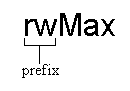
I highly recommend this article for a very pertinent critique of the
reverse Hungarian notation that we've become accustomed to:
Way back in September 1983, I started my first real job, working at Oranim, a big bread factory in Israel that made something like 100,000 loaves of bread every night in six giant ovens the size of…
I think Joel is absolutely right about this one, though I haven't
yet altered my coding as a result.
You're correct, of course, guess I was thinking of more than just nameing
conventions. The old "Practical Standards for Visual Basic" from MS press
was more along the lines of what I was thinking of ... or perhaps, if you
want to do a LOT of reading "Code Complete" by McConnell.
"Larry Linson" <bouncer@localh ost.not> wrote in message
news:dq6Ke.994$ 0d.282@trnddc09 ...[color=blue]
>
> "Scott McDaniel" <scott@infotrak kerDELETEME.com > wrote in message
> news:p_Odnbumae dAK2XfRVn-1w@comcast.com. ..[color=green]
>> The same standards apply to Access as would apply to VB6 ... it's
>> basically the same language[/color]
>
> Classic VB coding standards have never been as clean as Access -- there
> were at least three different naming conventions for classic VB used just
> within Microsoft.
>
> Except for refugees from VB who brought their old habits along, by far the
> most widely used and well known Naming Convention for Access is the
> Reddick Naming Convention, www.xoc.net/standards/default.asp.
>
> Larry Linson
> Microsoft Access MVP
>[/color]

Comment